Your cart is currently empty!

The Tile Revolution: What’s Trending in 2026
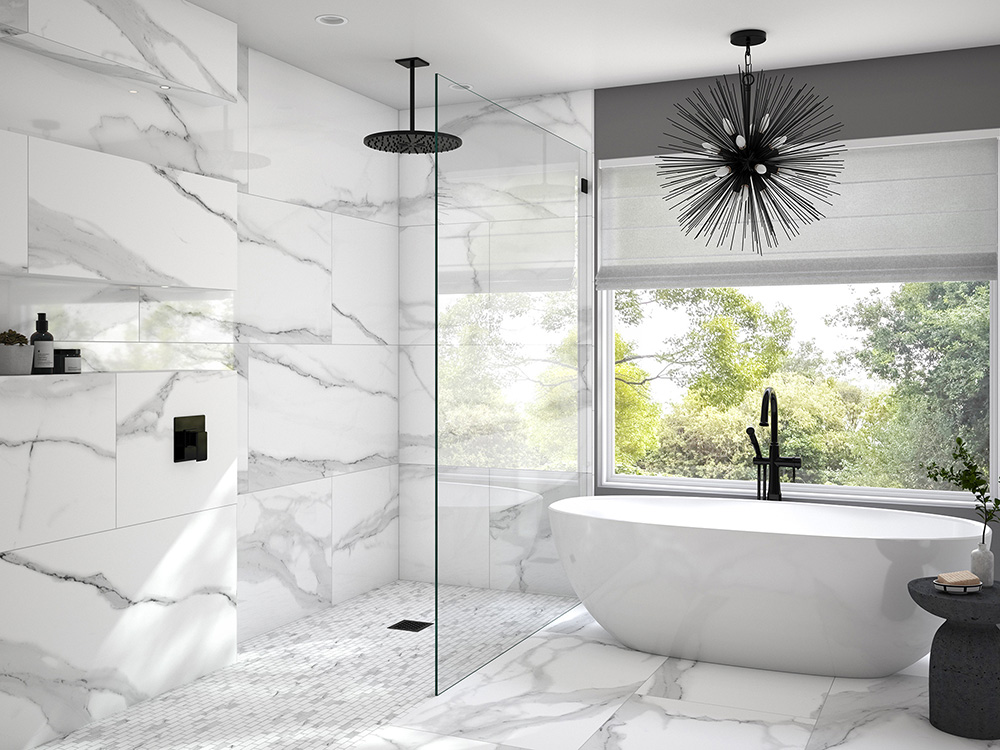
Now more than ever, tiles are stepping out of the background and taking center stage in both residential and commercial design. Once relegated to kitchen backsplashes, they’re now being used floor-to-ceiling, across entire walls, even in ceilings or feature zones and that shift is exactly what’s defining the tile world heading into 2026.
At the same time, craftsmanship is resurfacing as a major draw: mosaic inlays that blend artistry, pattern and material, large-format slabs that evoke continuous surfaces, textured finishes that invite touch; each of these is becoming a go-to for creating character. Combine that with color palettes shifting toward warm, moody neutrals (think beiges, browns, earthy tones) and you’ve got the blueprint for what’s ahead.
Now let’s walk through 2 key trends and show how you might bring them into your spaces.
1. Rich Saturated Color Accents + Warm, Moody Neutrals
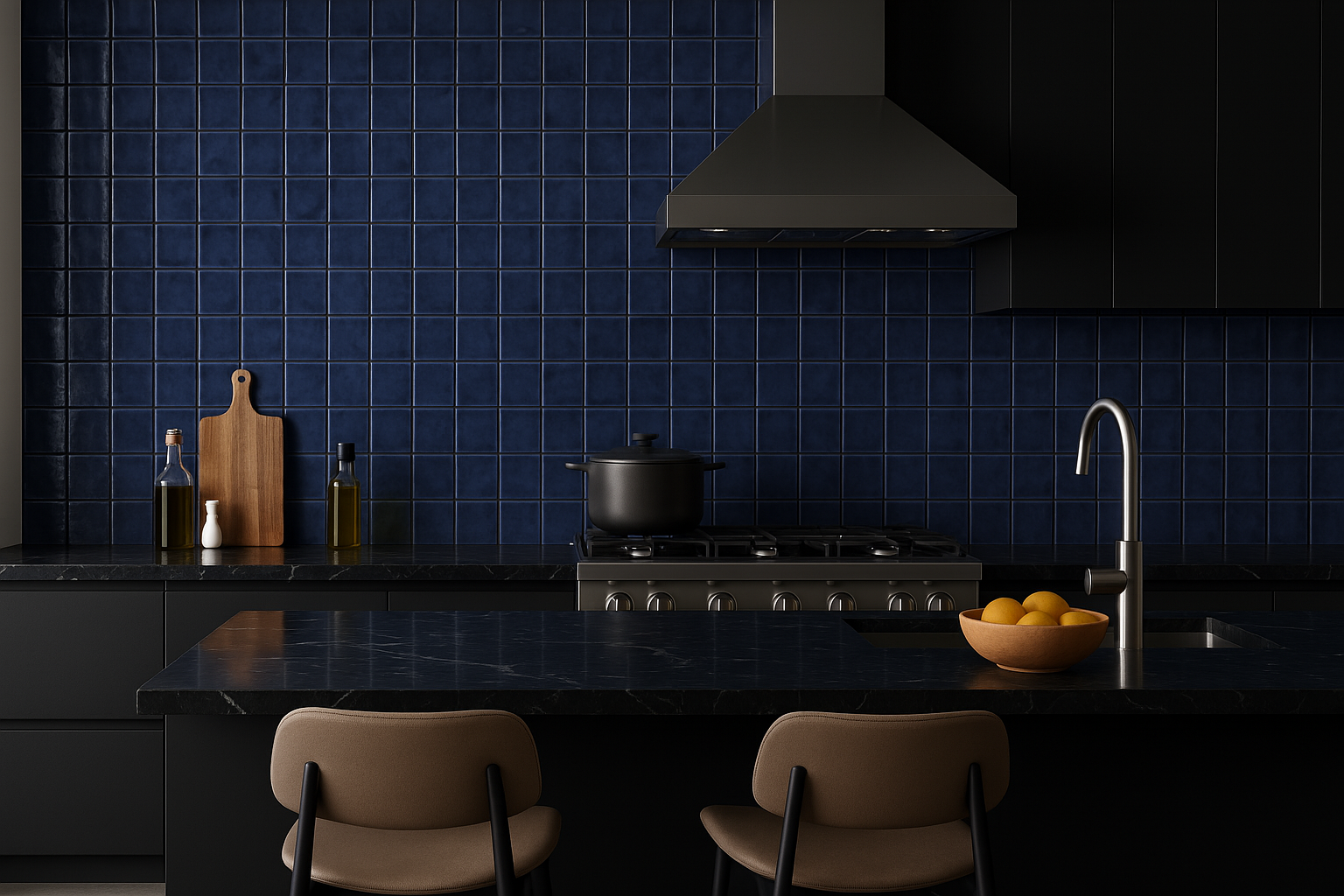
While the general palette remains neutral, the nuance is shifting into warm, moody neutrals such as clay, sand, taupe, deep olive, moss, rather than cool greys. At the same time, color is not gone: saturated hues and accent pieces (deep greens, terracotta, jewel-tones) are being used strategically.
Why it matters
- The shift to warm neutrals adds comfort, approachability and a sense of calm, which is important in today’s design climate.
- Accent colors allow for personality without overwhelming: a patterned or bold tile in a feature zone can elevate an otherwise neutral space.
- This dual direction (warm neutrals + saturated accent) gives you flexibility: choose to stay minimal or lean into maximalism.
How to use it
- Use a warm, earthy neutral tile as your base (floors, major wall surfaces), then add a jewel-tone accent tile (backsplash, niche, trim) to bring energy.
- In minimalist schemes: stick to one warm neutral, large format, minimal grout lines, and let materials speak.
- In maximalist schemes: layer patterned or mosaic tile as a focal wall or floor zone, think geometric or encaustic style in terracotta or deep green.
2. Textured and Geometric Tiles
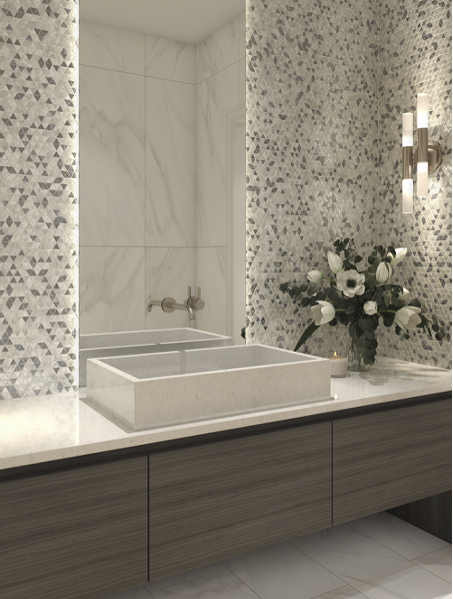
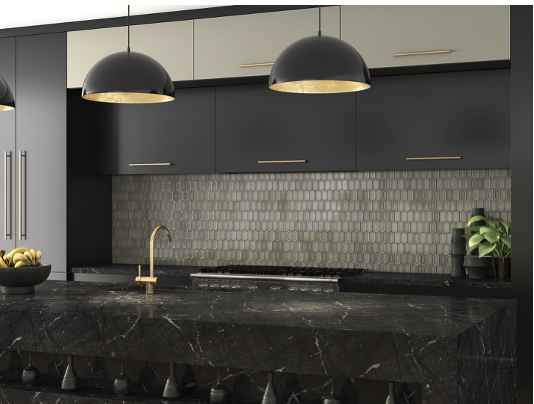
Beyond color and size, texture and artisanal character are key for 2026. Some of the major movements: tiles that look hand-crafted (zellige-style, artisanal ceramics), Textured tiles, hexagons and geometric mosaics that merge craft + design.
Why it matters
- Texture offers depth, shadow, and tactility, turning a flat wall into a visual and physical experience.
- Artisanal finishes bring uniqueness, even as porcelain becomes the standard for durability.
- Geometric mosaics allow you to create a feature wall or floor that is both design-forward and functional.
How to use it
- Pick a single textured or relief tile for a niche, shower wall, or accent zone, and leave other surfaces simpler to balance practicality.
- Use geometric mosaic or hexagon tiles as an inlay or border zone in bathrooms, entry halls, and fireplace walls to bring design interest.
- Combine a hand-crafted look tile with large-format minimal tiles: the contrast makes the texture pop.
Final Tip for Designers & Homeowners
When specifying or selecting tiles, ask your supplier/installer:
- Is this suitable for full-wall installation (if doing floor-to-ceiling)?
- What size and format is this tile, and how many grout lines will remain visible?
- What is the finish? Matte, honed, leathered or gloss and how will it age/clean?
- In a humid climate (like South Florida), is this tile appropriate for wet zones, floor + wall transitions?
- Will the accent tiles maintain visual impact without overwhelming the space, considering scale, placement and proportion?
- How does the tile coordinate with the rest of the space in color, texture, and material weight?
As we move into 2026, tile is no longer just a background element; it’s frontline design. Whether you are designing a home, a hospitality project, a retail or commercial space, tiles will carry visual weight, texture, color and durability.